
Choosing between paint and stain for your entry door is not just a cosmetic decision. The finish you select directly affects the door's durability, maintenance requirements, weather resistance, and overall curb appeal.
Many homeowners make this choice based on appearance alone, only to face peeling, fading, or excessive upkeep within a few years. Understanding the real-world performance of each option helps avoid these problems and ensures your entry door looks great and functions properly for years.
PAINT: MAXIMUM VERSATILITY AND PROTECTION
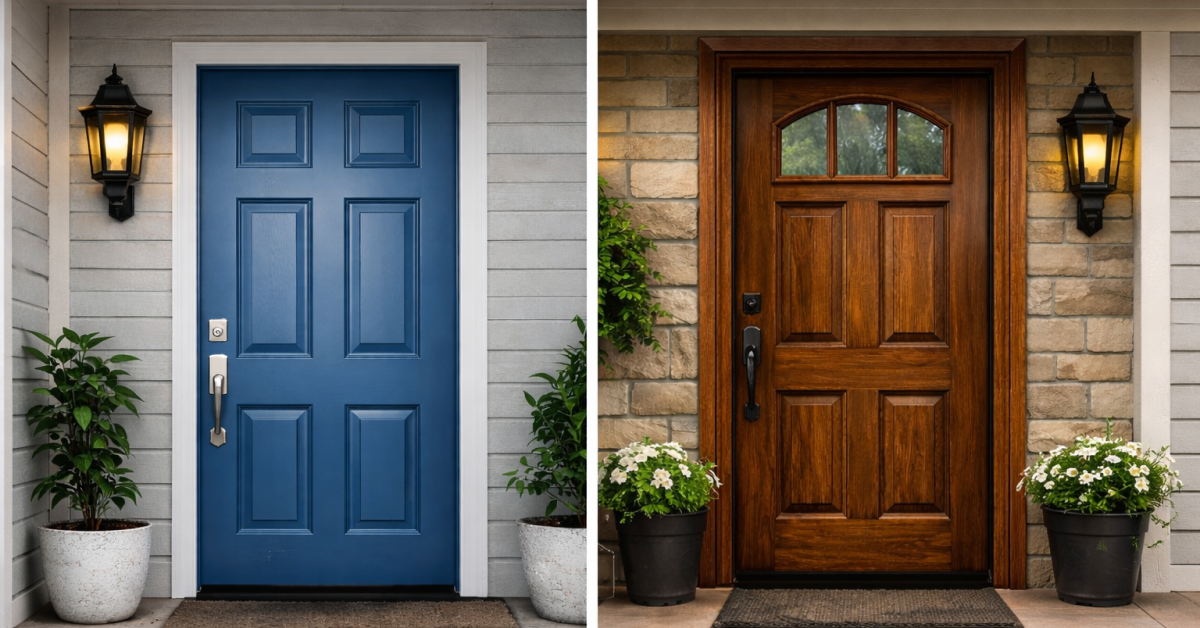
Painted entry doors remain one of the most popular choices across the US, especially for homes with diverse architectural styles.
Key advantages:
- Color flexibility. Paint allows unlimited color options to match any design scheme or exterior palette.
- Enhanced protection. Quality exterior paint creates a thick protective barrier against moisture, UV damage, and temperature fluctuations.
- Surface coverage. Paint completely conceals wood grain, imperfections, and repairs.
- Easier matching. Touch-ups and repainting are straightforward when using standard color formulations.
Common limitations:
- Hides the natural wood character completely
- Requires regular maintenance — most painted doors need repainting every 5–7 years in harsh climates
- Chips and scratches are more visible
- Improper surface preparation leads to early failure
Painted doors work best for:
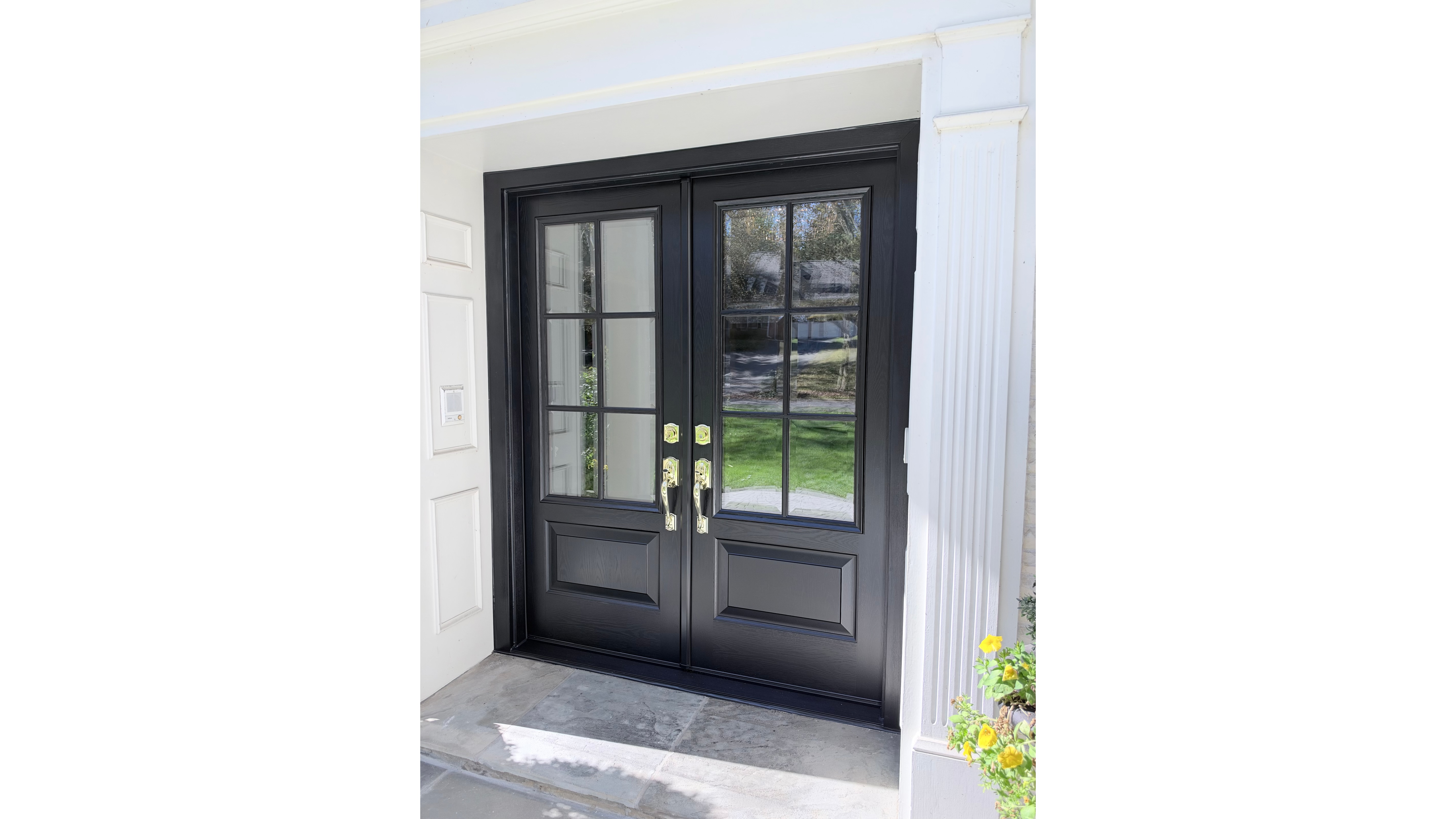
- fiberglass and steel entry doors
- composite or engineered wood materials
- homes with modern, traditional, or bold color schemes
- areas with extreme weather exposure
At All Dwelling Solutions, we see painted entry doors perform exceptionally well when properly prepped and finished with high-quality exterior coatings designed for door applications.
STAIN: NATURAL BEAUTY AND WOOD GRAIN EMPHASIS
Stained entry doors showcase the natural texture and character of wood, making them ideal for homes that prioritize organic aesthetics.
Key advantages:
- Highlights wood grain. Stain enhances the natural beauty and uniqueness of wood species.
- Lower maintenance visibility. Minor wear blends into the wood rather than standing out.
- Timeless appearance. Wood-toned doors maintain classic appeal across design trends.
- Penetrating protection. Quality stains soak into wood fibers rather than sitting on the surface.
Common limitations:
- Limited to wood doors
- Color options are restricted to wood tones
- Fading occurs faster in direct sunlight
- Repairs and touch-ups must match the wood and existing finish
- More frequent reapplication may be needed in high-UV areas
Stained doors work best for:
- solid wood or wood veneer entry doors
- craftsman, rustic, traditional, or Mediterranean-style homes
- doors in shaded or covered entryways
- homeowners who value natural wood aesthetics
Stain performs exceptionally well when combined with UV-resistant topcoats and proper surface sealing.
WEATHER AND CLIMATE CONSIDERATIONS
The performance of paint and stain varies significantly depending on the local climate.
In Maryland and similar Mid-Atlantic climates:
- Paint offers better moisture resistance during humid summers and wet winters
- Stain requires UV-protective topcoats due to strong seasonal sunlight
- Both finishes need proper sealing to handle freeze–thaw cycles
In high-UV or coastal areas:
- Paint typically lasts longer without significant color fade
- Stain fades faster and may require more frequent reapplication
- Marine-grade or UV-resistant formulations are essential for both
In extreme temperature zones:
- Both finishes must handle expansion and contraction
- Paint provides better thermal protection for composite materials
- Stain on solid wood moves naturally with the door
Ignoring regional climate factors is one of the main reasons entry door finishes fail prematurely.
MAINTENANCE REQUIREMENTS
Painted doors:
- Cleaning: wash with mild detergent and water
- Inspection: check annually for chips, cracks, or peeling
- Repainting: typically every 5–8 years, depending on exposure
- Touch-ups: sand, prime, and repaint damaged areas
Stained doors:
- Cleaning: Use wood-safe cleaners only
- Inspection: check for UV damage, water penetration, or fading
- Re-staining: typically every 3–5 years,s depending on sun exposure
- Touch-ups: light sanding and stain reapplication to affected areas
Both finishes require consistent upkeep, but paint generally demands less frequent full refinishing in most climates.
DOOR MATERIAL COMPATIBILITY
Not all finishes work equally well on every door material.
Solid wood doors:
- Accept both paint and stain
- Stain showcases natural grain
- Paint provides maximum weather protection
Fiberglass doors:
- Can be painted or accept wood-grain stain finishes
- Paint is the most common
- Textured fiberglass can mimic a stained wood appearance
Steel doors:
- Must be painted
- Stain does not adhere to metal surfaces
- Factory finishes often outperform field-applied paint
Composite or engineered wood doors:
- Paint is the preferred option
- The stain may not penetrate properly
- Surface texture affects the finish appearance
Choosing the wrong finish for your door material leads to adhesion failure and premature wear.
LONG-TERM COST COMPARISON
Paint:
- Lower initial material cost
- Moderate labor cost for prep and application
- Less frequent refinishing is needed
- Easier DIY maintenance
Stain:
- Slightly higher material cost for quality products
- Comparable labor cost
- More frequent reapplication in high-UV areas
- Requires more skill for even application and matching
Over a 10–15-year period, painted doors often require less total investment in refinishing, especially in full-sun exposures.
MAKING THE RIGHT CHOICE FOR YOUR ENTRY DOOR
Choose paint if you prioritize:
- color customization
- maximum weather protection
- lower long-term maintenance
- non-wood door materials
Choose stain if you prioritize:
- natural wood appearance
- traditional or rustic aesthetics
- solid wood entry doors
- shaded or covered entryways
There is no universal "best" option — the right finish depends on your door material, architectural style, climate, and maintenance preferences.
PROFESSIONAL APPLICATION MAKES THE DIFFERENCE
Even the highest-quality paint or stain will fail if improperly applied. Common issues include:
- inadequate surface preparation
- wrong product selection for climate or material
- insufficient drying time between coats
- lack of UV protection or proper sealing
At All Dwelling Solutions, we work with entry doors every day and understand which finishes perform best in Maryland's variable climate. We evaluate each door's material, exposure, and condition to recommend the right coating system. Our technicians prepare surfaces properly, use professional-grade products, and apply finishes with precision to ensure long-lasting beauty and protection.
Choosing between paint and stain for your entry door requires understanding real-world performance, not just appearance.
Trust All Dwelling Solutions to guide you through the selection process and deliver a flawless, durable finish that enhances your home's curb appeal for years to come.