
Your front door does more work than almost any other part of your home. It's the first thing guests notice, the main barrier between your family and the outside, and, in an older house, often one of the biggest sources of drafts. Yet most homeowners only think about front door replacement when something goes wrong: the door sticks every summer, light shows around the edges, or the bottom of the frame turns soft.
This guide walks you through the decision the same way we do on an in-home visit in Montgomery County and Howard County: honestly, without pressure, and with enough detail that you can compare any quote you receive.
Signs It's Time to Replace Your Front Door
A door that needs new weatherstripping or a hinge adjustment doesn't need to be replaced. These signs, however, usually mean the door system itself has reached the end of its life:
- Drafts you can feel even after new weatherstripping. This usually means the door slab has warped or the frame is out of square.
- Rotted wood at the bottom of the jamb, the brickmould, or the sill. Water has been getting in, and it will keep spreading.
- Sticking or binding that comes and goes with the seasons, which is typical of older wood doors absorbing Maryland humidity.
- Fogged or cracked glass in the door or sidelites.
- Dents, rust, or peeling finish on an older steel door.
- Security concerns: a lock that doesn't seat cleanly, a weak strike plate, or a door you can feel flex when it's locked.
- The style no longer fits your home, especially after new windows, siding, or a remodel.
Tip: Press a screwdriver gently into the bottom of your door frame on both sides. If it sinks in easily, there's rot. A new door installed into a rotted opening will fail early, so this needs to be repaired as part of the job.
Replace the Door or the Whole Entry System?
You'll hear two terms when shopping: a slab (just the door) and a pre-hung entry system (the door already mounted in a new frame with a new sill, hinges, and weatherstripping).
In all homes, we recommend a full entry system. The door itself is rarely the only problem. The sill, the frame, and the seals are what keep water and air out, and they wear out together. Replacing everything as one engineered unit is what actually solves drafts and leaks, and it's the only way to get the manufacturer's full performance and warranty.
Steel vs. Fiberglass Front Doors
Wood doors are beautiful but demand regular refinishing and react to humidity. For most homeowners, the real choice for exterior door replacement is between steel and fiberglass.
Steel front doors
- Look: smooth painted finish or embossed woodgrain
- Security: excellent, especially heavier-gauge steel
- Insulation: good, thanks to a foam core
- Weather resistance: can dent and can rust if a scratch is left untreated
- Best for: security and strong value
Fiberglass front doors
- Look: very realistic stained woodgrain or smooth paint
- Security: very good
- Insulation: very good to excellent
- Weather resistance: won't dent, rust, or rot
- Best for: a wood look, energy efficiency, and long-term durability
If your entry faces south or west and takes direct afternoon sun, or if you want the look of a stained wood door without the upkeep, fiberglass is usually the better long-term choice.
What Does a "Custom Made Front Door" Really Mean?
Many homeowners search for a custom made front door expecting a one-of-a-kind piece from a woodworker. In practice, the best custom entry doors today are built to order: manufactured to your home's exact opening, with the style, glass, finish, and hardware you choose. That matters for two reasons:
- Fit. Many homes in Bethesda, Potomac, Chevy Chase, and Silver Spring have openings that don't match standard sizes. A door built to measure avoids the oversized trim and filler pieces that make a replacement look like an afterthought.
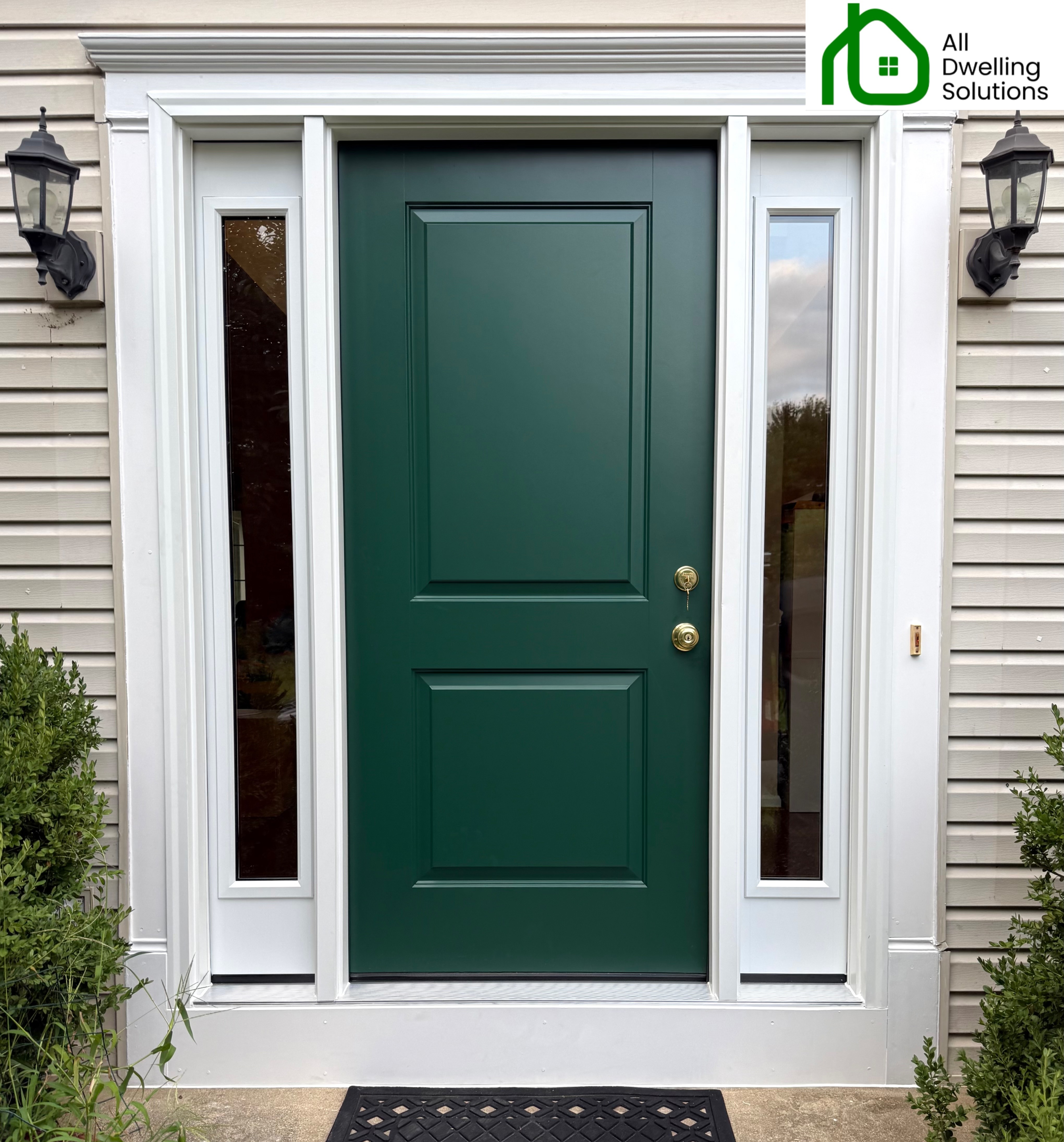
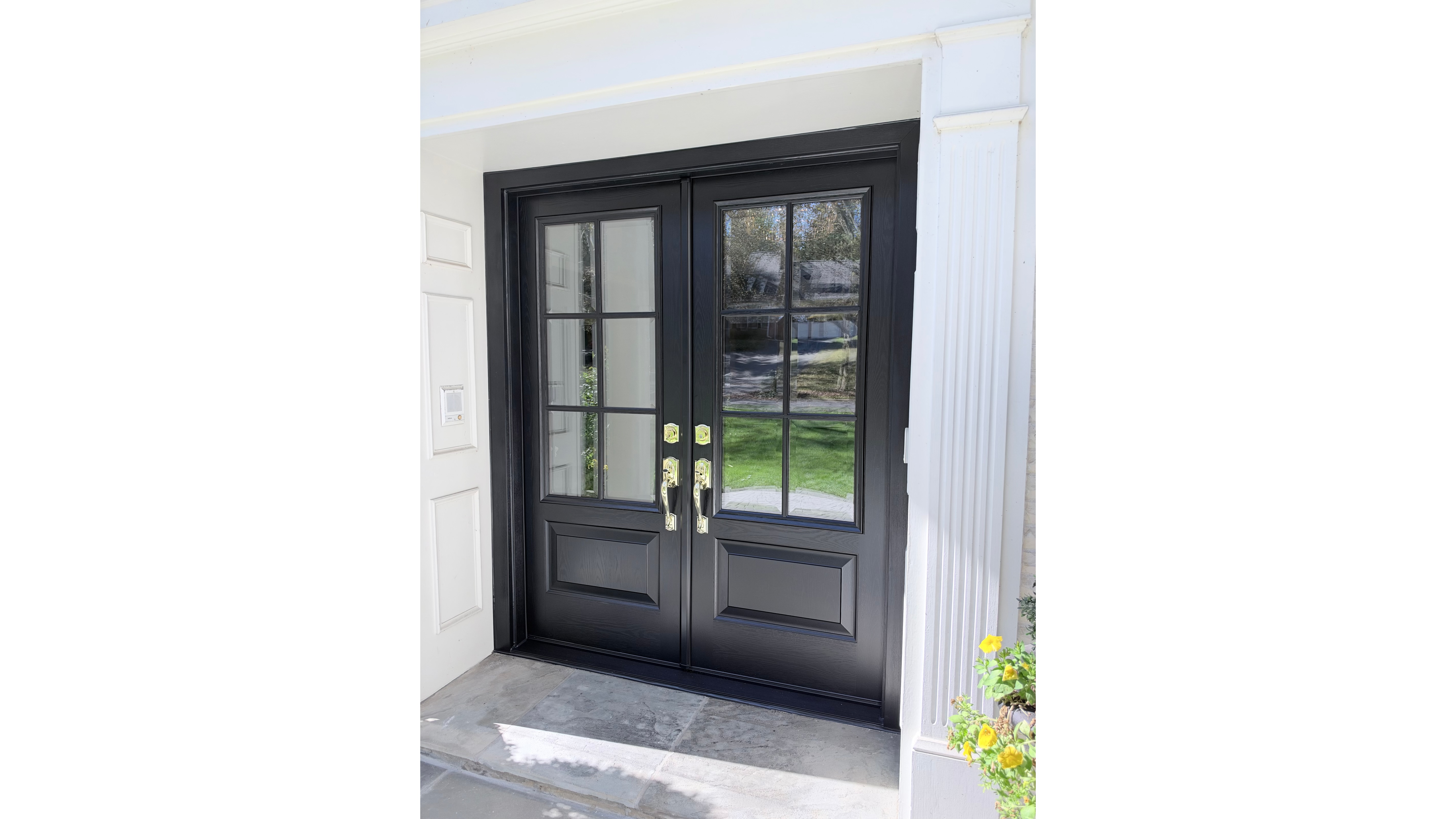
- Design. You choose the door style, sidelites, transom, decorative glass, stain or paint color, and hardware finish, so the entry suits your home's architecture.
Custom entry door options from ProVia
As an installer of ProVia doors, we often recommend their entry systems for custom work. You can browse the full collection of ProVia entry doors on the manufacturer's site. ProVia currently offers three entry door lines, and every one of them can be custom-sized in 1/8-inch increments of width and height, so the door is truly built for your opening:
- Signet® (fiberglass, most popular): ProVia's widest selection of door styles and sidelite options, built to be structurally stronger than traditional fiberglass doors. Choose a smooth finish or a Cherry, Mahogany, Oak, Knotty Alder, or Fir woodgrain, backed by a 15-year finish warranty.
- Ascent™ (fiberglass, refined woodgrain): an authentic White Oak woodgrain or smooth finish in a range of stains and paint colors, with distinctive options such as inscribed doors and Panel Plank designs. It carries a 10-year finish warranty.
- Legacy™ (steel, security): built with 20-gauge steel, which ProVia calls the strongest, most durable door on the market. It comes in an oak woodgrain texture or a smooth painted finish, and you can even choose a different style or finish for the inside and outside of the door. It carries a 10-year finish warranty.
All three lines come in 33 factory-applied paint colors, and ENERGY STAR® certified options are available in each. Signet and Ascent can also be built as 8-foot doors, a real upgrade for homes with high foyer ceilings.
What Professional Front Door Installation Looks Like
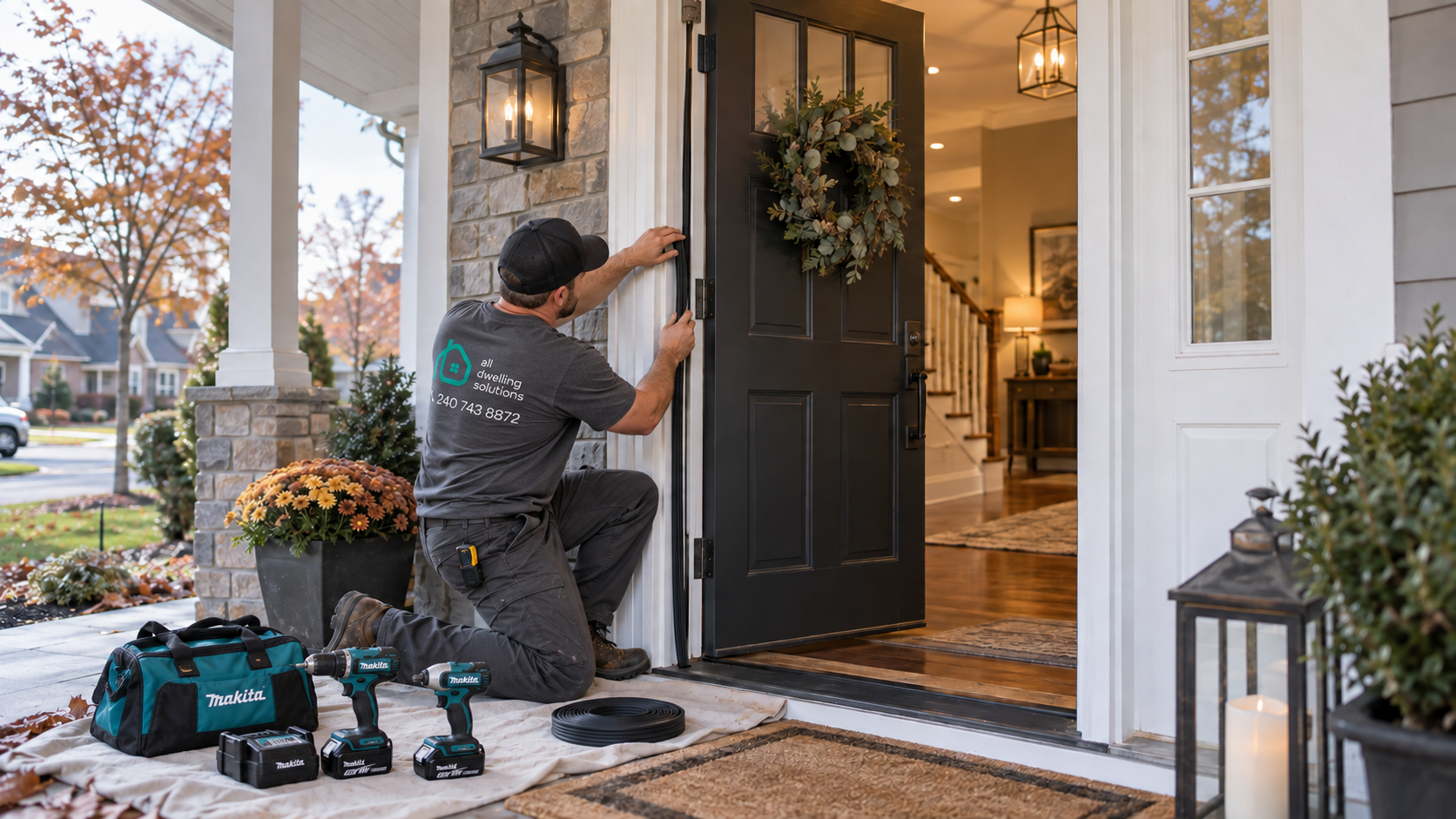
Even the best door will leak, stick, or draft if it's installed poorly. The installation is where most of the long-term performance comes from. Here's how a proper front door installation works:
- Measure and inspect. We measure the rough opening, check the subfloor and framing for rot, and confirm the swing direction, hardware location, and storm door clearance.
- Order the door. Your entry system is built to the measurements and options you selected.
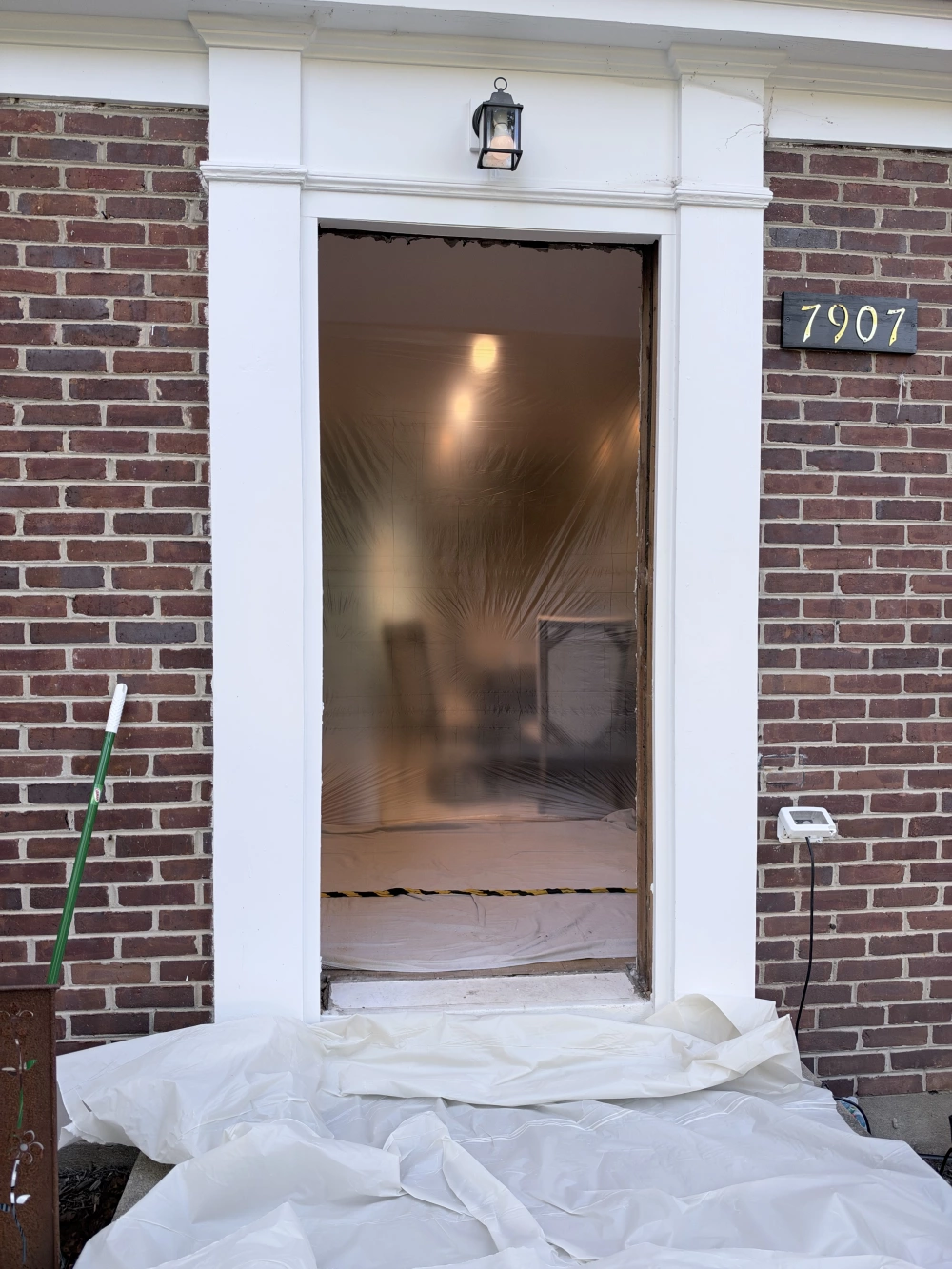
- Remove the old door carefully. We protect your floors and interior trim, and we take out the old frame without damaging the surrounding siding or brick.
- Repair the opening. Any rotted framing or subfloor is replaced, and the sill area is properly flashed so water drains out instead of in.
- Set, level, and seal. The new unit is set plumb, level, and square, insulated with low-expansion foam, and sealed on the exterior.
- Trim, hardware, and adjustment. We install the trim and hardware, then adjust the door until it latches smoothly and seals evenly all the way around.
- Clean-up and walkthrough. We remove all debris and the old door, then walk you through operation, care, and warranty.
Most single-door replacements are completed in one day. Entries with sidelites, transoms, or significant rot repair can take longer.
How to Choose a Front Door Installer
When comparing contractors, ask each one a few direct questions:
- Who will actually install the door? Many companies sell the job and hand it to a subcontractor. At All Dwelling Solutions, our own trained crews do every installation, with no subcontractors.
- What happens if there's rot? A good installer inspects it and explains how it will be handled.
- Is the quote for a slab or a complete entry system? Make sure you're comparing the same scope.
- What does the warranty cover? Ask about both the manufacturer's product warranty and the installer's labor warranty.
- Can I see the door options in person? Seeing finishes, glass, and hardware up close makes the decision much easier. You can schedule a showroom visit.
Ready to Replace Your Front Door?
Get a free, transparent estimate from All Dwelling Solutions. We'll measure your opening, check for hidden rot, and walk you through door options with no pressure.
Request a free estimate or call (301) 301-9488