Can the cloudy glass be replaced, or do you need an entirely new window? Learn how to choose the right solution for your Maryland home.
Seeing moisture, haze, or condensation trapped inside a window can be frustrating. It obstructs your view, makes the window appear dirty, and may indicate that the insulating glass is no longer performing as intended. However, a foggy window does not always mean you need to replace the entire window. In many cases, only the sealed glass unit needs to be replaced. In others, problems with the frame, sash, hardware, or installation make a complete window replacement the better long-term solution. At All Dwelling Solutions, we provide both window glass replacement and complete window replacement throughout Maryland. Because we offer both options, we can evaluate the actual condition of the window and recommend the appropriate solution—not automatically sell you an entirely new window.
Most modern residential windows contain an insulated glass unit, commonly called an IGU. This unit consists of two or more panes of glass sealed together around a spacer.
The sealed space between the panes may contain insulating gas, such as argon, and the glass may include a Low-E coating designed to improve energy performance.
Over time, the perimeter seal can fail. Once that happens, moisture can enter the space between the panes and create:
Condensation or water droplets
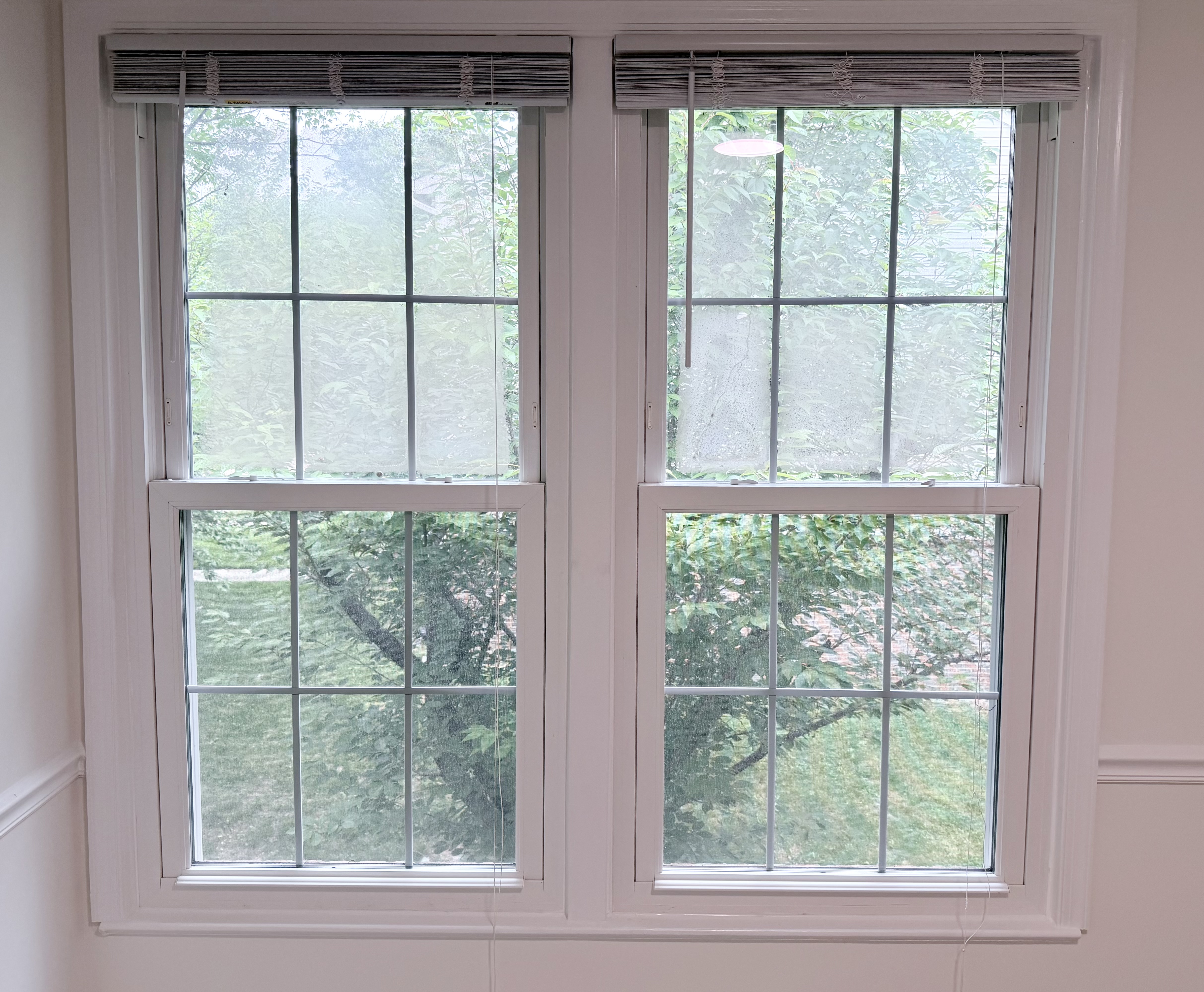
A cloudy or milky appearance
Mineral deposits or streaks
Haze that cannot be cleaned from either side
Reduced visibility through the window
Changing temperatures and seasonal weather conditions can make the fogging appear and disappear. Even if the glass occasionally clears, moisture between the panes is still a sign that the sealed glass unit has been compromised.
Is the Moisture Actually Between the Glass?
Before scheduling a repair, it is important to determine where the condensation is located.
Condensation on the room-side surface
Moisture on the interior surface is usually related to high indoor humidity combined with a cold glass surface. This is common during Maryland winters and does not necessarily mean the glass seal has failed.
Improving ventilation, using exhaust fans, or lowering indoor humidity may help.
Condensation on the exterior surface
Exterior condensation can occur when energy-efficient glass remains cooler than the outside air. It is often temporary and does not normally indicate a defective window.
Condensation between the panes
If the moisture cannot be wiped away from either side, it is likely trapped inside the insulated glass unit. This generally indicates seal failure and usually requires replacement of the sealed glass unit.
Can You Replace Only the Foggy Glass?
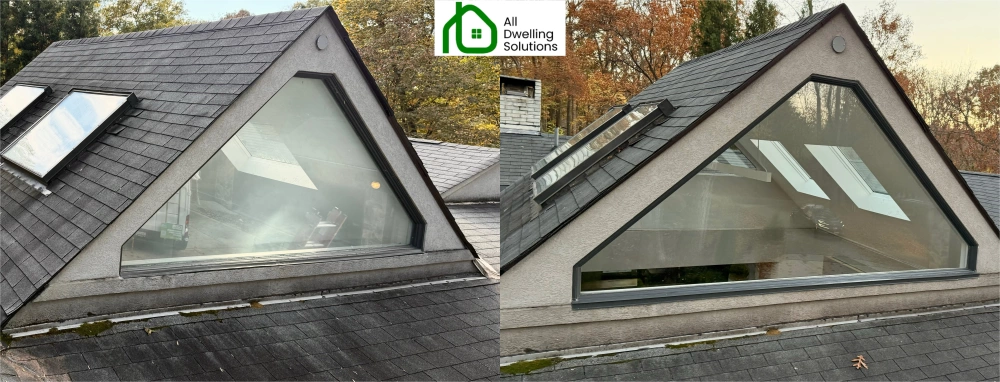
Yes. If the window frame and sash remain in good condition, the failed insulated glass unit can often be removed and replaced without replacing the entire window.
A new custom glass unit is manufactured to match the required:
Width and height
Overall glass thickness
Glass type
Spacer thickness and color
Tempered-glass requirements
Low-E coating
Grid pattern, when applicable
The new insulated glass unit is then installed into the existing sash or window frame.
This approach preserves the original window while restoring a clear view and a properly sealed glass assembly. It can also reduce disruption to the surrounding interior and exterior finishes.
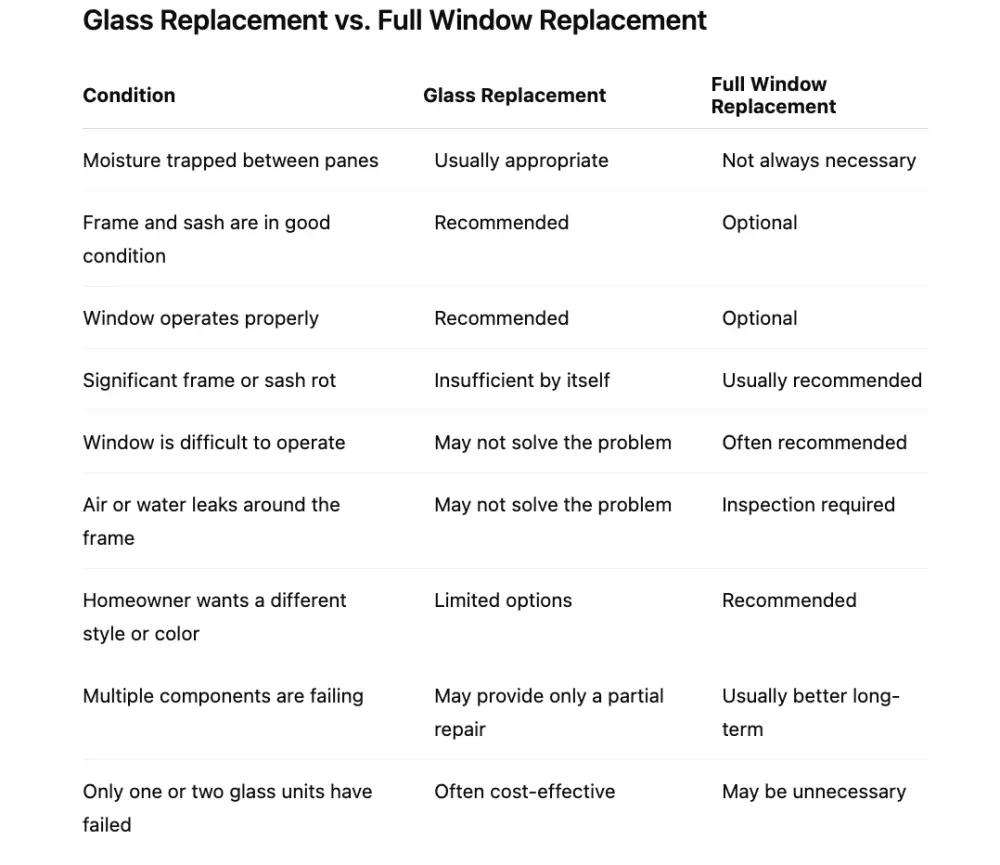
Replacing only the insulated glass unit may be the right choice when:
The frame is structurally sound
The sash is not rotted, cracked, or distorted
The window opens, closes, and locks properly
There are no significant drafts around the frame
Only one or several glass units have failed
You are satisfied with the window’s appearance and operation
Replacement parts or matching glass configurations are available
Glass-only replacement is especially practical when a relatively small number of windows have fogged glass, but the remaining components are still performing properly.
It may also be possible to replace cracked or broken glass, upgrade to Low-E glass, or reproduce certain grid configurations without changing the entire window.
When Should the Entire Window Be Replaced?
A new insulated glass unit will correct a failure inside the glass assembly, but it will not repair problems with the frame, sash, hardware, or original installation.
Complete window replacement may be the better investment when:
The wood frame or sash has significant rot
The window is difficult to open or will not stay open
Locks, balances, cranks, or other components are failing
The frame is warped, cracked, or out of square
Air or water is leaking around the window assembly
Several components are deteriorating at the same time
Replacement glass or parts are no longer practical to obtain
The existing window does not meet your comfort, design, or performance goals
You are already planning to replace multiple windows throughout the home
A full replacement also provides an opportunity to select a new window style, frame material, color, hardware finish, grid design, and energy-efficient glass package.
Glass Replacement Does Not Fix Every Draft or Leak
Foggy glass and a drafty window are not always the same problem.
The insulated glass unit is only one part of the complete window assembly. Air or water may also enter through:
Worn weatherstripping
Failed exterior sealant
Gaps around the frame
Damaged sill components
Deteriorated wood
Improper flashing
Poor original installation
Replacing the glass will address a failed seal between the panes, but it will not correct leaks originating around the window frame.
That is why a proper inspection is important. The source of the problem should be identified before deciding between glass replacement, window repair, or complete replacement.
What About “Defogging” a Window?
Some services attempt to reduce the visible moisture by drilling small openings into the glass and allowing the unit to dry.
This may temporarily improve the appearance, but it is not the same as installing a new factory-sealed insulated glass unit. It does not recreate the original sealed space or fully restore the original insulating-gas fill.
For a more complete repair, the failed insulated glass unit is generally removed and replaced with a newly manufactured sealed unit.
Can Foggy Glass Be Upgraded to Low-E Glass?
In many situations, the replacement insulated glass unit can be manufactured with Low-E glass.
Low-E coatings are designed to reduce heat transfer through the glass. Depending on the coating selected, they can help control winter heat loss, summer solar heat gain, fading from ultraviolet exposure, and overall indoor comfort.
However, the correct glass package depends on the window’s orientation, existing specifications, visible appearance, and compatibility with the frame.
When replacing only one glass unit, homeowners should also consider whether the new Low-E glass may look slightly different from the surrounding original glass under certain lighting conditions.
How Much Does Foggy Window Glass Replacement Cost?
There is no reliable one-price-fits-all answer because every insulated glass unit must be evaluated individually.
The cost can be affected by:
Glass dimensions
Double-pane or triple-pane construction
Overall glass thickness
Low-E coatings
Tempered or laminated safety glass
Decorative grids
Specialty shapes
Accessibility
Window brand and construction
Condition of the sash or frame
Number of glass units being replaced
A standard rectangular insulated glass unit will normally cost less than a large, tempered, unusually shaped, or decorative unit.
Accurate pricing typically requires measurements and photographs or an on-site assessment.
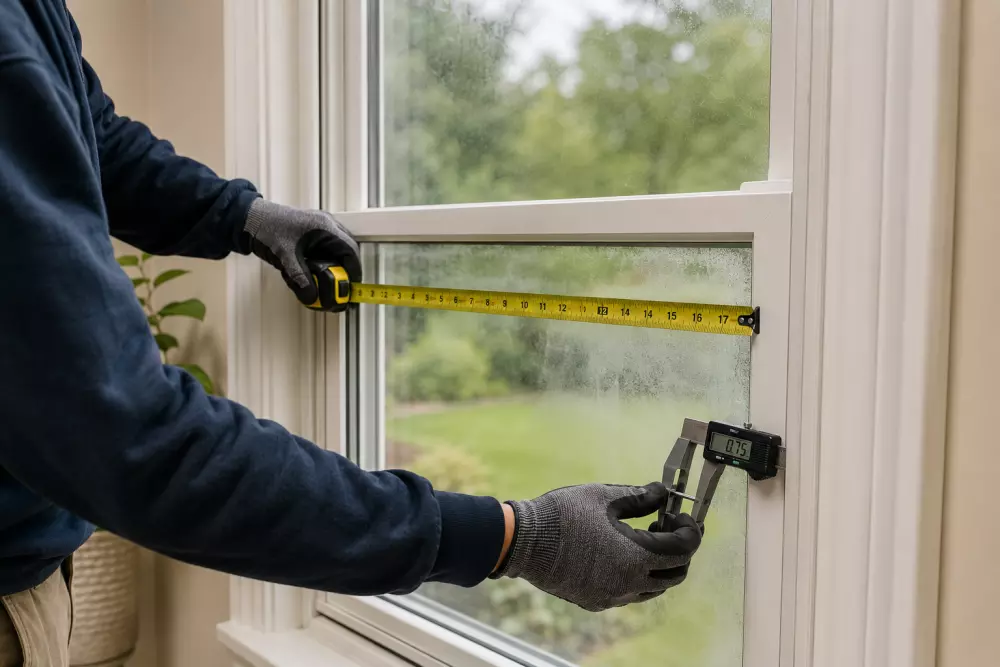
Foggy glass replacement normally involves two stages. First, the existing glass must be measured accurately. The replacement insulated glass unit is then custom-manufactured because residential glass units are generally not universal, ready-to-install products. Once the new unit is ready, the failed glass is carefully removed, and the replacement is installed into the existing sash or frame. The actual installation may be relatively quick, but manufacturing time depends on the glass specifications. Tempered, decorative, oversized, or specialty glass may require additional production time.
Should You Replace One Foggy Window or All Your Windows?
One failed glass unit does not automatically mean every window in the house needs to be replaced.
If the remaining windows are operating properly and have no signs of frame deterioration, it may be reasonable to repair only the affected unit.
However, if many windows are the same age and several have begun developing seal failure, operational issues, drafts, or rot, it may be worth comparing the cost of repeated repairs with a planned window replacement project.
A professional evaluation can help you prioritize the immediate problems while preparing for future improvements.
Professional Foggy Window Glass Replacement in Maryland
Our team can evaluate the condition of your existing window and help determine whether you need:
Insulated glass unit replacement
Broken or cracked glass replacement
Window component repair
Exterior sealing or trim repair
Rotted-wood repair
Complete window replacement
Our goal is to recommend the solution that makes sense for the actual condition of your window.
Request an Evaluation from ALLDS
If you see condensation, haze, streaks, or moisture trapped between the panes, send us photographs of the entire window and a close-up of the affected glass.
The team at All Dwelling Solutions can help determine whether the glass can be replaced while preserving the existing window or whether complete replacement would provide a better long-term result.
Repair or replace—either way, you end up with ALL DWELLING SOLUTIONS
Contact All Dwelling Solutions today to request an evaluation for foggy window glass replacement or complete window replacement in Maryland.